
With summer just around the corner, now is the perfect time to think about how your shed will handle the heat. Anyone who has stepped into a closed-up shed on a 40-degree afternoon knows it can feel more like an oven than a workspace.
A hot shed isn’t just uncomfortable. High temperatures can damage what you store inside, from paint tins and batteries to power tools, electronics and your caravan’s interior. If your shed doubles as a home gym or workshop, the heat can make it almost unusable for months at a time.
The good news is there are some simple and effective ways to keep your shed cooler. Whether you’re planning a new build or upgrading an existing shed, here’s what makes the biggest difference.
Why do sheds get so hot?
Steel sheds are strong, durable and low maintenance, which is why they’re so popular in Australia. But steel is also very good at absorbing and transferring heat. On a sunny day, the roof and walls soak up the sun’s energy and radiate it into the space below.
Without anywhere for that hot air to escape, it builds up under the roof and the temperature inside keeps climbing throughout the day. Even after the sun goes down, a closed shed can stay warm well into the evening.
To keep a shed cool, you need to tackle the problem from three angles: stop heat getting in, let hot air out, and reflect as much sunlight as possible in the first place.
Insulation
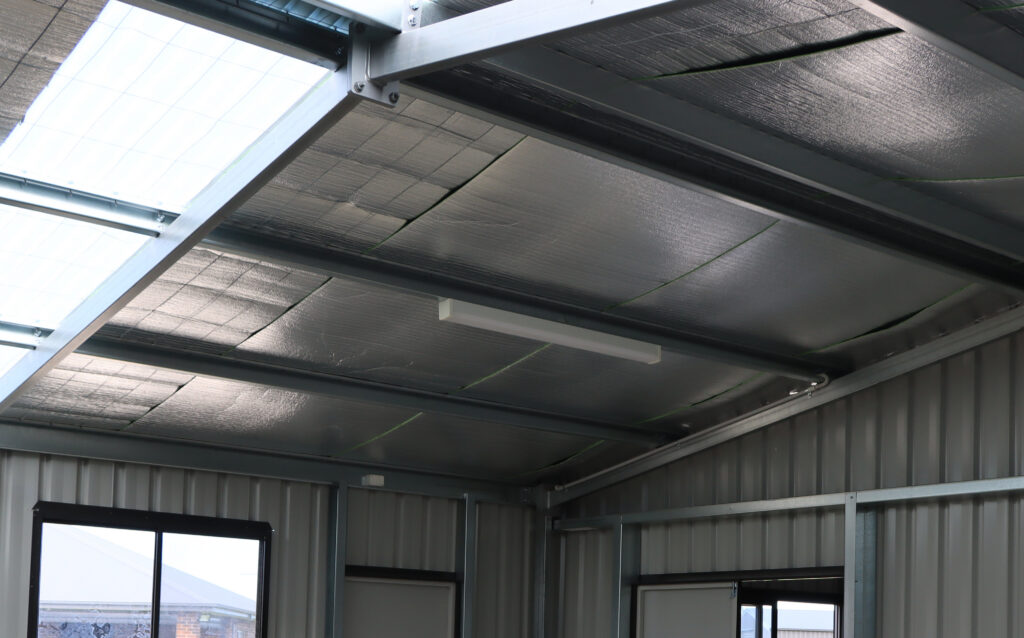
If you only make one upgrade, make it insulation. Roof insulation is the single most effective way to reduce heat in a shed, because the roof takes the brunt of the summer sun.
Insulation creates a barrier between the hot steel and the inside of your shed, slowing down how quickly heat moves through. It can make a noticeable difference to how comfortable the space feels on a hot day, and it works in reverse during winter by helping to hold warmth in.
Insulating the walls as well as the roof gives you even better results, especially if you plan to spend a lot of time in your shed as a workshop, gym or hobby space. It’s much easier and more cost effective to add insulation during the build than to retrofit it later, so it’s worth thinking about at the planning stage.
Ventilation and whirlybirds
Hot air rises, so the hottest part of your shed is always up near the roof. Giving that air a way out is key to bringing the overall temperature down.
Whirlybirds are one of the simplest and most popular ways to do this. These roof-mounted ventilators spin in the breeze and draw hot, stale air out of the shed. They don’t need electricity, they’re low maintenance and they work around the clock. Depending on the size of your shed, one or several whirlybirds can make a real difference.
For the best airflow, pair roof ventilation with a way for cooler air to come in lower down, such as wall vents, windows or a PA door you can leave open while you work. This creates a natural flow of air through the space rather than just trapping heat inside.
Choose a cooler colour
The colour of your shed has a bigger impact on temperature than many people realise. Darker colours absorb more of the sun’s heat, while lighter colours reflect more of it away.
If you’re building a new shed and keeping it cool is a priority, consider a lighter roof colour. You can still choose a darker shade for the walls or trims to match your home, while the roof does the heavy lifting on heat reflection. Our team can help you pick a colour combination that looks great and suits your property.
Colour is one of the easiest decisions to get right at the start, and one of the hardest to change later, so it’s worth weighing up looks and performance together.
Don’t forget about condensation
Keeping your shed cool is about more than comfort. Big swings between hot days and cool nights can cause condensation to form on the underside of a steel roof. Over time, those drips can lead to rust, mould and water damage to anything stored below.
This is a particular concern for tools, machinery, vehicles and caravans, where moisture can cause corrosion or damage to seals and interiors. The same upgrades that keep your shed cool, insulation and good ventilation, also help prevent condensation by reducing temperature differences and moving moist air out.
If you’re storing a caravan or boat, check out our post on why it’s important to store recreational vehicles undercover for more ways to protect your investment.
A few more ways to beat the heat
- Think about placement: If you’re building new, positioning your shed to take advantage of shade from trees or other buildings can help. Facing roller doors away from the harsh afternoon sun also makes a difference.
- Open up in the cooler hours: Opening doors and windows early in the morning or in the evening lets cool air in and flushes out trapped heat.
- Add fans or cooling: A pedestal or ceiling fan won’t lower the temperature, but moving air makes a workspace feel much more comfortable. Some of our customers even add split-systems in their sheds.
- Store heat-sensitive items carefully: Keep paint, chemicals, aerosols and batteries low down and away from the hottest part of the shed, and check labels for storage temperatures.
Ready for summer?
A cooler shed is a more comfortable, more useful and better protected shed. Whether you’re planning a new build with insulation, whirlybirds and a heat-smart colour scheme, or you want to talk through options for your existing setup, our team is here to help.
With over 5,000 sheds designed and installed across Greater Shepparton and beyond, we know what it takes to build a shed that handles a Victorian summer. Reach out to our friendly and knowledgeable team or request a quote. Our form takes just 1 minute to complete.